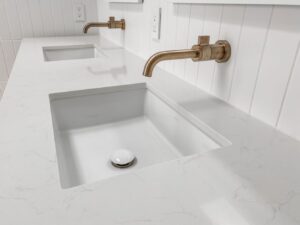
A loose faucet handle on your sink can feel like a small issue, but it will get worse over time if it’s left unfixed. The good news is that in many cases, you can fix a loose faucet handle yourself with just a few tools and a little patience. Follow these steps to easily fix your loose faucet handle!
1. Examine your faucet
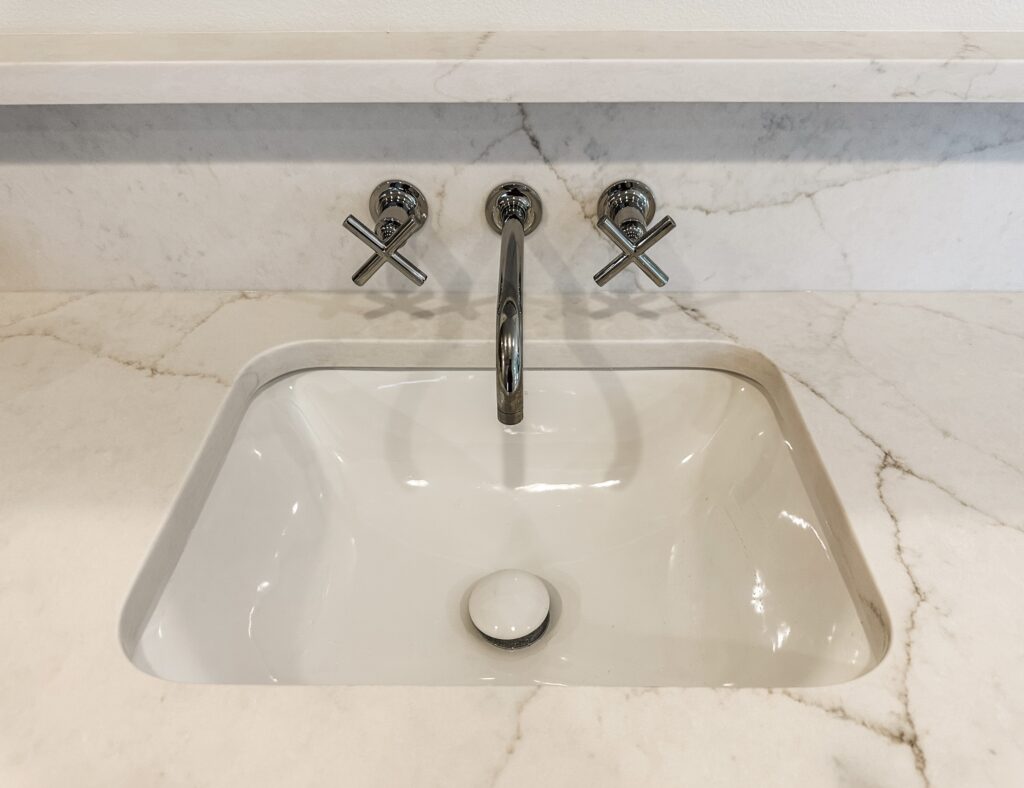
Before you grab tools, take a minute to look closely at your faucet handle.
Look for a small decorative screw cap on top or on the side of the faucet handle. This cap usually hides the screw that holds the handle in place.
2. Close the drain
Any time you are working with small screws or screw caps, you risk dropping something into the sink. To avoid losing important parts, close the sink drain before you start. If your sink does not have a stopper that fully closes, place a small towel or rag over the drain opening.
3. Carefully remove the screw cap
Most loose faucet handle issues start at the screw hidden beneath a small cap. This screw cap may be metal or plastic and often has a hot or cold (red and blue) indicator on it.
Use your fingernail or a small flathead screwdriver to gently pry up the screw cap. Work slowly so you do not scratch the faucet finish. Set the cap aside somewhere safe, like on a folded towel by the sink, so it does not roll away.
4. Locate and loosen the handle screw
With the screw cap removed, you should see the screw that secures the faucet handle. This is typically a screw head or a hex screw designed to be adjusted with an Allen wrench.
At this point, do not fully remove the screw unless the manufacturer recommends it. Often, all that is needed to fix a wobbly faucet handle is a small adjustment.
5. Use a tool to tighten the screw
Most loose faucet handle problems are solved by tightening this screw. Insert the Allen wrench or screwdriver into the screw and turn it clockwise in small, firm turns.
Tighten the screw until the faucet handle no longer feels loose, but avoid overtightening. Too much force can strip the screw or damage the faucet body. Check the movement of the handle as you go. It should move smoothly to turn water on and off without feeling wobbly or stiff.
6. Place the screw cap back
Once the handle feels secure, snap the screw cap back into place. Line it up carefully with the opening and press it down evenly so it sits flush with the handle.
7. Test the faucet
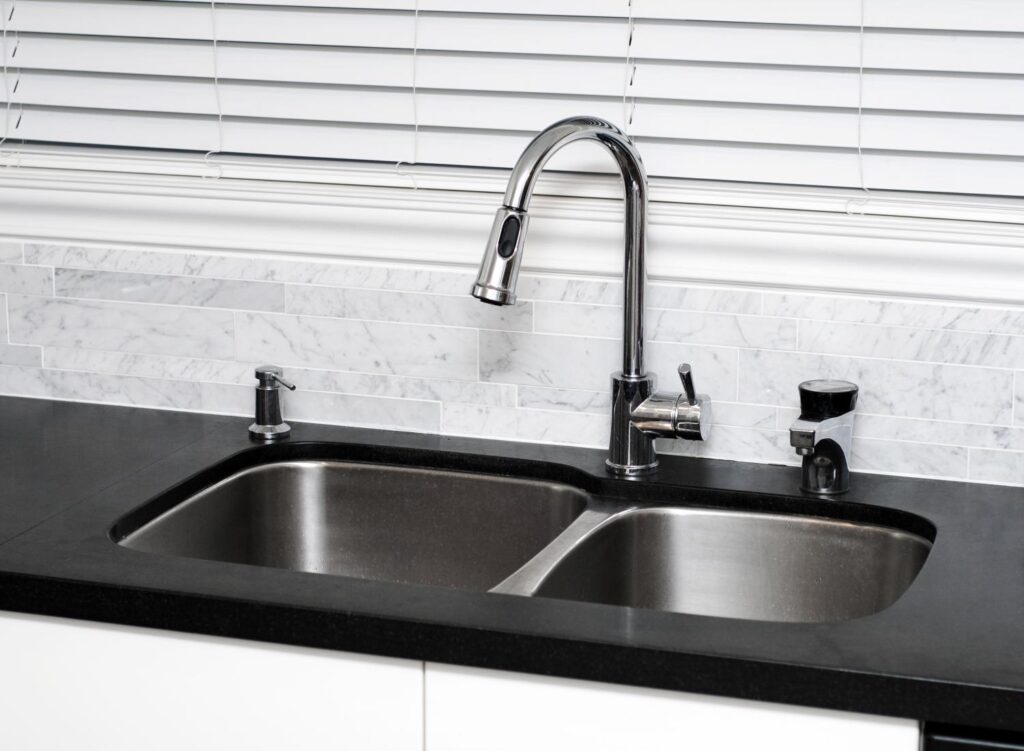
Now it is time to test your work! Turn the faucet handle on and off several times.
If everything feels solid, you have successfully fixed your loose faucet handle. If it loosens again shortly after tightening, there may be internal wear, and you may need a repair or replacement.
Need a Plumber’s Help? Call The Plumbing Physician!
If your faucet handle keeps coming loose, the screw is stripped, or you notice leaks along with the wobble, it may be more than a quick DIY fix. That is when it helps to call a trusted local plumber who can diagnose the problem and recommend the best long-term solution.
The Plumbing Physician is a family owned plumbing company that has been serving homeowners in the greater Seattle area since 1996, providing honest, reliable, and high quality plumbing repair services for kitchens, bathrooms, and more. We offer a one-year warranty on all of our services, and we’d love to help you with your faucet!
Give us a call today to learn more about our services, and visit our Yelp or Google reviews to hear what customers say about our high-quality work.
FAQ
Will I need to remove the entire faucet?
In most cases, you do not need to remove the entire faucet to fix a loose faucet handle. Tightening the handle screw with an Allen wrench or screwdriver is usually enough. You only need to remove the whole faucet if there is internal damage, corrosion, or a leak that cannot be fixed by tightening or replacing the handle alone.
There’s multiple screws on my faucet. Which one should I unscrew?
Focus on the screw directly under the screw cap or the one located in the side of the handle. This is typically the handle set screw that controls how tight or loose the faucet handle feels. Other screws on the faucet body often secure the faucet to the sink or countertop and should not be adjusted unless you are doing a larger repair or installation.
My faucet handle keeps coming loose. How do I fix this?
If your faucet handle keeps getting wobbly again after you tighten it, the screw may be stripped, or the inside of the handle could be worn. Try removing the handle and checking the screw and the contact points for visible wear.
Replacing the screw or the handle sometimes solves the problem. If the looseness continues, have a plumber inspect the faucet to determine whether a new handle, cartridge, or full faucet replacement is the best choice.
How do I know if my faucet needs to be replaced?
If tightening the handle screw does not fix your loose faucet handle, or if you also see rust, mineral buildup, frequent leaks, or difficulty turning the water on and off, it may be time to replace the faucet. Older faucets that need repeated repairs are often more expensive to maintain over time than simply installing a new, efficient kitchen or bathroom faucet.
Our plumbers here at The Plumbing Physician can inspect your fixture and let you know whether a repair or replacement will be more cost effective in the long run.